How to Onboard a New Executive Functioning Coaching Client (Step-by-Step + Checklist)
Updated October 17, 2026 · AI Life is Good
The first two weeks with a new client decide how the whole engagement feels. For executive functioning (EF) clients this matters even more: the people you coach often struggle with exactly the things a messy onboarding asks of them, like remembering forms, tracking emails and keeping appointments. A clear, low-friction process is part of the coaching.
1. Send a short intake form before the first call
Keep it to one sitting. Ask for contact details, what made them reach out now, the two or three areas they most want to improve (planning, time management, task initiation, organization, focus, emotional regulation), their schedule constraints and how they prefer reminders. Avoid clinical questions you aren't trained to interpret; coaching isn't diagnosis.
2. Follow up with a welcome manual
A welcome manual answers the questions that otherwise turn into email threads: how sessions work, how to reschedule, what happens between sessions, how to contact you and what results are realistic. EF clients benefit from having it all in one place they can return to. Put your booking link and contact details on the first and last page.
3. Use a self-assessment to set a baseline
A simple self-rating across core EF skills gives you a starting point and gives the client language for what's hard. Re-run it at week 6 or 12 so progress is visible. It's one of the most motivating pages in the whole program.
4. Plan the first session before it happens
A first-session plan keeps you from spending the hour on logistics. A good structure: review the intake and assessment (10 min), pick one priority goal (15 min), design one small system the client can try this week (20 min), agree on a check-in method (5 min), and recap in writing (10 min).
5. Start habit tracking in week one
Give the client one simple tracker tied to the system you designed together. Keep it visual and forgiving: the goal is noticing patterns, not perfect streaks.
Onboarding checklist
- Intake form sent and returned
- Welcome manual delivered
- Self-assessment completed
- First-session plan prepared
- Habit tracker shared after session one
- Next session booked and reminder method agreed
Save time with templates
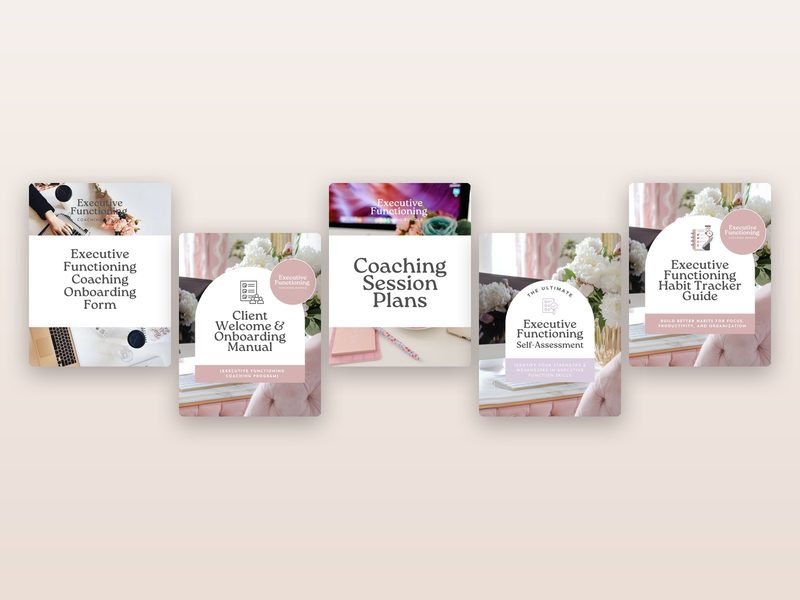
You can build all of this yourself in Canva, or start from a finished set. Our Executive Functioning Coach Client Kit includes the intake form, welcome manual, session plans, self-assessment and habit tracker guide as five editable Canva templates, ready to brand with your logo and colors.
FAQ
What should an executive functioning coaching intake form include?
Contact details, the client's main goals, current challenges (planning, time management, focus, organization, emotional regulation), any existing support, preferred session times and how they like to be reminded.
How long should coaching onboarding take?
Most coaches can finish onboarding within the first week: intake form before the first call, welcome manual right after booking, self-assessment before session one and habit tracking from week one.